Navigating the healthcare system to find effective pain relief often feels overwhelming. Initially, countless patients begin their journey by typing a simple phrase into a search engine, hoping for a quick solution to chronic discomfort or acute injury. However, your physical health requires far more than a convenient location then Physiotherapy Center Near Me.
Therefore, when searching for a physiotherapy center near me in Dhaka, prioritize facilities with board-certified experts. Specifically, you must seek out clinical excellence, advanced diagnostic reasoning, and specialized medical credentials. At Back in Motion, we provide elite, US-standard physical medicine to the local community. Ultimately, this definitive guide will teach you exactly how to identify the best physiotherapy center in Dhaka and what to expect from world-class musculoskeletal rehabilitation.
The Importance of Choosing the Best Physiotherapy Center Near Me
Undeniably, most people choose their medical providers based on geographic proximity. While you want a clinic that fits into your daily routine, choosing a facility solely because it sits down the street often leads to subpar outcomes. Instead, you must prioritize the quality of the clinical frameworks the facility uses.
Why Standard “Physiotherapy Center Near Me” Searches Fall Short
Unfortunately, search engine algorithms prioritize geographic location over medical expertise. Consequently, when you search for a local clinic, the results do not automatically filter out facilities that rely on outdated, passive treatments. In fact, many standard clinics still utilize an “assembly line” approach. For instance, they might place you on a heating pad for twenty minutes, apply a generic electrical stimulation machine, and send you home without ever identifying the root cause of your pain.
As a result, this outdated model wastes your time and allows your injury to worsen. Conversely, true healing requires active intervention. Therefore, you need a facility that emphasizes diagnostic accuracy over temporary symptom masking.
The Back in Motion Difference: The Best Physiotherapy Center in Dhaka
To secure actual, long-lasting recovery, you need an institution that champions evidence-based practice. Specifically, evidence-based practice means our clinicians integrate the best available scientific research with profound clinical expertise and your unique patient values.
We do not guess at Back in Motion; rather, we assess. Furthermore, we evaluate your joint mechanics, muscle firing patterns, and neurological responses before we ever touch a treatment table. Consequently, this rigorous dedication to scientific methodology distinguishes us as the premier destination for advanced physical medicine in the region.
Prioritizing DPT and D.O. Credentials in Your Physiotherapy Center Near Me
The letters behind your clinician’s name matter immensely. Indeed, they dictate the level of education, clinical reasoning, and manual skill your provider brings to your treatment session.
What US-Standard Training Means for Your Musculoskeletal Therapy
US-standard medical training represents the pinnacle of physical rehabilitation education globally. Moreover, facilities that employ Doctors of Physical Therapy (DPT) and Doctors of Osteopathic Medicine (D.O.) bring a completely different tier of medical insight to your recovery.
Importantly, these advanced degrees require years of rigorous post-graduate study. During this time, students master human anatomy, neurophysiology, biomechanics, and complex differential diagnosis. They do not just learn how to treat a sprained ankle; instead, they learn how to identify if that ankle pain originates from a local ligament tear, a lumbar spine nerve root compression, or a systemic inflammatory disease.
Meet Our Experts: Dr. Md. Abdullah Yousuf and Dr. Tazia Sardar
At Back in Motion, our clinical leadership embodies this elite standard of care.
For example, Dr. Md. Abdullah Yousuf, D.O., serves as our Chief Medical Consultant. His osteopathic medical background means he views the body as an integrated, holistic unit. Specifically, he specializes in identifying how a dysfunction in your foot mechanics might actively cause your chronic shoulder pain.
Additionally, Dr. Tazia Sardar, DPT, leads our advanced rehabilitation pipelines. Her Doctor of Physical Therapy credentials ensure that every home exercise program, manual therapy intervention, and gait training session aligns strictly with the latest global research. Together, they deliver unparalleled musculoskeletal therapy directly to you.
Understanding Musculoskeletal Rehabilitation at the Best Physiotherapy Center in Uttara and Gulshan
Whether you reside in the northern sectors of the city or right in the diplomatic zone, understanding the core concepts of your treatment empowers you as a patient.
What is Musculoskeletal Physiotherapy Near Me?
Musculoskeletal physiotherapy focuses exclusively on diagnosing, treating, and preventing injuries and disorders of the human movement system. Furthermore, this system encompasses your bones, joints, ligaments, tendons, muscles, and the specific peripheral nerves that supply them.
Therefore, when you seek musculoskeletal physiotherapy near me, you are looking for a specialist who understands mechanical load, tissue healing timelines, and structural anatomy. We do not just rub sore muscles. Instead, we actively remodel human tissue through targeted physical interventions.
Core Principles of Evidence-Based Practice in Musculoskeletal Therapy Near Me
Notably, our Gulshan physiotherapy center strictly adheres to three fundamental pillars of evidence-based practice:
-
Current Clinical Research: First and foremost, we constantly review medical journals to ensure our techniques reflect the latest biomechanical discoveries.
-
Clinical Expertise: Secondly, Dr. Yousuf and Dr. Sardar utilize their thousands of hours of hands-on patient experience to recognize complex clinical patterns.
-
Patient-Centric Goals: Finally, we design your rehabilitation around your specific life. After all, an elite athlete requires a vastly different rehabilitation program than an office worker who simply wants to pick up their grandchildren without back pain.
Common Musculoskeletal Physiotherapy Conditions We Treat at Our Gulshan Physiotherapy Center
The human body sustains a wide variety of structural injuries. Because of this, a premium clinic must possess the diagnostic equipment and clinical knowledge to handle complex pathologies across the entire anatomical spectrum.
Spinal Dysfunctions: Neck and Lower Back Pain
Spinal pain cripples more adults globally than any other condition. Consequently, we frequently treat herniated discs, sciatica, cervical radiculopathy (pinched nerves in the neck), and lumbar facet joint syndrome.
Initially, our clinicians evaluate your spinal alignment, core stability, and nerve mobility. Instead of prescribing dangerous pain medications, we then utilize targeted spinal mobilization and specific directional preference exercises to centralize your pain and pull pressure off the compromised nerve roots.
Joint Degeneration: Osteoarthritis and Shoulder Impingements
As we age, the cartilage protecting our joints naturally degrades. As a result, patients frequently seek the best physiotherapy center in Uttara or Gulshan to manage severe osteoarthritis of the knees, hips, and hands.
Additionally, we also manage complex shoulder pathologies, including rotator cuff tears, frozen shoulder (adhesive capsulitis), and subacromial impingement. To treat these, we employ precise manual therapy to stretch the joint capsule, followed subsequently by strengthening protocols that stabilize the joint and restore your pain-free range of motion.
Sports Injuries and Soft Tissue Trauma
Undoubtedly, athletes place immense stress on their musculoskeletal systems. For this reason, we routinely rehabilitate anterior cruciate ligament (ACL) tears, meniscus damage, tennis elbow (lateral epicondylitis), and Achilles tendinopathy.
For these musculoskeletal physiotherapy conditions, we implement specific tissue-loading protocols. Specifically, we use eccentric muscle training to remodel damaged tendons, thereby ensuring the new collagen fibers align correctly to prevent future re-injury.
The Role of a Specialized Musculoskeletal Physiotherapist

When you book an appointment at Back in Motion, you partner with a dedicated specialist. Indeed, we operate fundamentally differently from standard medical clinics where a doctor spends only five minutes in the room with you.
Diagnostic Assessments Over Passive Treatments
Your journey begins with a comprehensive, hour-long biomechanical evaluation. During this session, a musculoskeletal physiotherapist will take a detailed medical history, listening carefully to exactly how and when your pain behaves.
Next, we execute a physical examination. Particularly, we test your deep tendon reflexes, measure your exact degrees of joint mobility using a goniometer, and assess the strength of isolated muscle groups. Furthermore, we analyze your posture, observe your walking gait, and perform specialized orthopedic tests to pinpoint the exact tissue generating your symptoms.
Formulating a Targeted Musculoskeletal Therapy Near Me Plan
Once we establish a definitive clinical diagnosis, we build your customized roadmap. Moreover, we explain your condition to you using anatomical models, thus ensuring you fully understand your own body.
Your targeted plan will include specific manual therapy interventions. For instance, we might utilize joint mobilizations to unblock a stiff spine, soft tissue mobilization to break down fascial adhesions, or neuromuscular re-education to teach your brain how to fire dormant muscles. Above all, we focus on active, hands-on care.
Executing Proper Musculoskeletal Physiotherapy Exercises
Ultimately, exercise serves as the true medicine in physical rehabilitation. However, not all movement is therapeutic. Rather, the specific type, dose, and frequency of your movement dictate whether you heal or re-injure yourself.
The Danger of Generic Online Exercises
Unfortunately, many patients attempt to bypass professional care by searching for generic exercise routines on YouTube. Consequently, this approach frequently causes catastrophic tissue damage.
For example, if you have a herniated disc, performing a standard “toe touch” stretch will actively push the disc further into your spinal cord. Similarly, if you have a rotator cuff tear, standard overhead presses will shred the remaining tendon. Therefore, you must receive a precise diagnosis before you attempt musculoskeletal physiotherapy exercises.
Prescriptive Functional Mobility Exercises
At our clinic, we treat exercise as a highly specific prescription. Accordingly, we guide you through three distinct phases of therapeutic movement:
-
The Acute Phase: Initially, we utilize gentle isometric exercises and mobility drills to flush out inflammation, modulate pain signals in your brain, and protect the healing tissue.
-
The Sub-Acute Phase: Subsequently, we introduce motor control exercises. Here, we teach your stabilizing muscles how to turn on at the correct time to protect your joints during daily movements.
-
The Remodeling Phase: Finally, we implement progressive resistance training. In this stage, we load the muscles and tendons with heavier weights to build functional capacity, thereby ensuring you return to your sport or daily life stronger than before.
Why Proximity Should Not Compromise Your Musculoskeletal Therapy Near Me
Certainly, we understand the appeal of finding the absolute closest clinic. However, traveling an extra twenty minutes to receive care from board-certified DPT and D.O. clinicians will actually save you months of wasted time.
For instance, if you live in Uttara, traveling to our Gulshan physiotherapy center guarantees you access to US-standard care. Meanwhile, standard clinics often string patients along for thirty or forty sessions without showing measurable improvement. Because we utilize expert diagnostic reasoning and aggressive, active rehabilitation, our patients typically require fewer total sessions to achieve complete recovery. Consequently, you recover faster, saving both time and money in the long run.
The Long-Term Value of Evidence-Based Practice
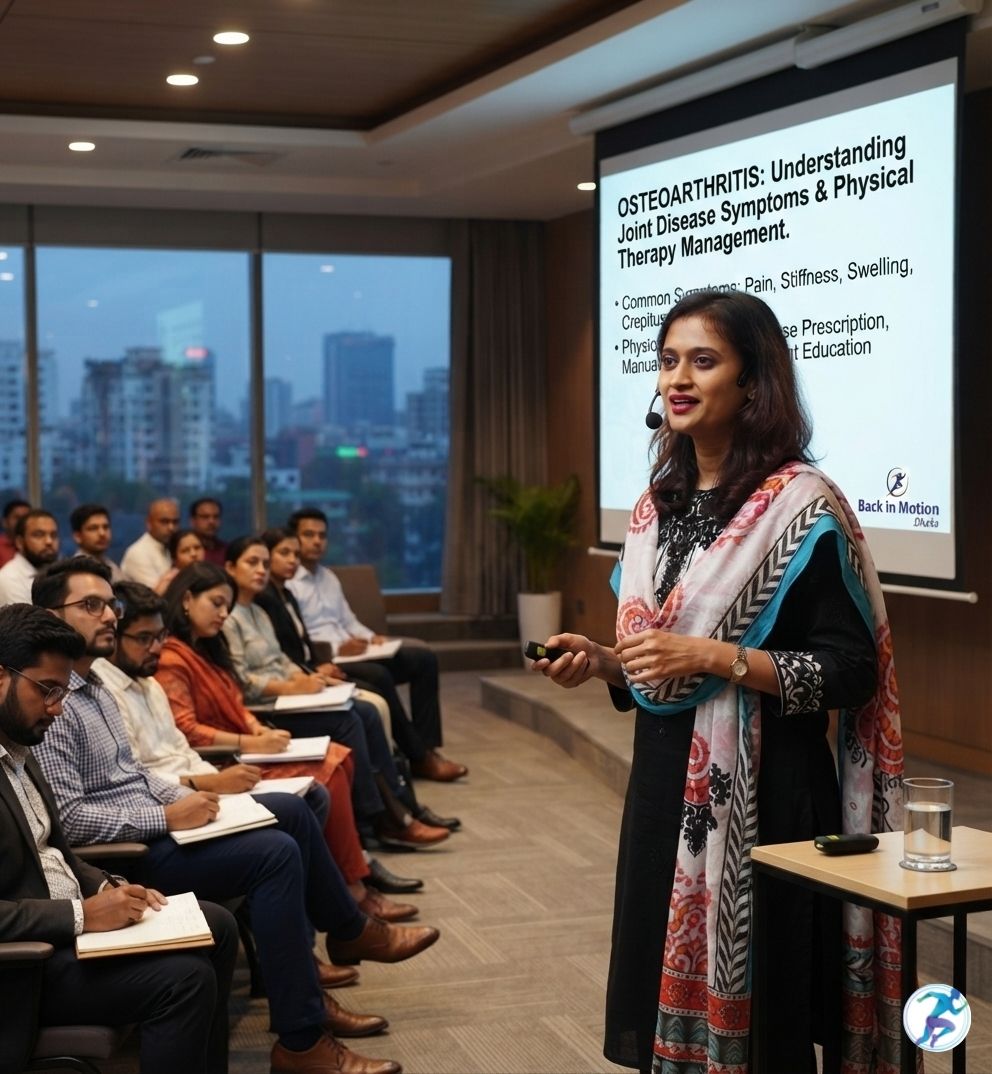
Ultimately, investing in high-quality physical medicine pays lifelong dividends. When you choose an elite clinic, you do not just eliminate your current pain; rather, you gain a profound understanding of your own body.
First, we teach you the biomechanical rules of human movement. Next, we show you how to set up your office desk ergonomically to prevent future neck pain. Additionally, we teach you dynamic warm-up routines to protect your knees before you play weekend sports. In essence, we aim to make you entirely independent, thus giving you the tools to manage your own musculoskeletal health for decades to come.
10 Frequently Asked Questions About Finding a Physiotherapy Center Near Me
1. How do I identify the best physiotherapy center near me in Dhaka?
Ultimately, look strictly at the clinical credentials of the staff. The best centers employ Doctors of Physical Therapy (DPT) or Doctors of Osteopathic Medicine (D.O.). Furthermore, they must emphasize evidence-based practice and perform a comprehensive, one-on-one physical assessment before they ever prescribe a treatment plan.
2. What exactly does a musculoskeletal physiotherapist do?
A musculoskeletal physiotherapist specializes in diagnosing and treating physical dysfunctions of the bones, muscles, joints, and nerves. Specifically, they analyze your biomechanics, correct structural imbalances, perform advanced manual therapy, and design targeted exercise programs to restore your pain-free mobility.
3. Why do you emphasize DPT and D.O. credentials?
These credentials represent the highest global standards for physical medicine. Indeed, a DPT or D.O. possesses advanced training in differential diagnosis, neurology, and biomechanics. Consequently, this ensures they can accurately identify the root cause of your pain, rather than just treating the surface-level symptoms with basic massage.
4. Are musculoskeletal physiotherapy exercises different from going to the gym?
Absolutely. Conversely, gym exercises generally focus on aesthetic muscle growth or cardiovascular endurance. Musculoskeletal physiotherapy exercises target specific neuromuscular dysfunctions. Therefore, we prescribe clinical exercises to remodel damaged tendons, stabilize hypermobile joints, and correct dangerous movement patterns that cause chronic pain.
5. What should I expect during my first visit to your Gulshan physiotherapy center?
Expect a thorough, clinical evaluation. Specifically, we will discuss your medical history in detail, assess your joint mobility, test your muscle strength, and analyze your posture. Subsequently, based on these objective findings, we will explain your exact diagnosis and build a customized, active rehabilitation plan.
6. Do I need an MRI or X-ray before I search for musculoskeletal therapy near me?
No, you do not need imaging before your first visit. In fact, our clinical experts often diagnose soft tissue injuries more accurately through functional movement testing than through static imaging. Furthermore, if our assessment indicates you need an MRI to rule out severe pathology, we will refer you to the appropriate imaging center.
7. How long will it take to recover from my musculoskeletal physiotherapy conditions?
Recovery timelines depend entirely on the specific tissue injured and the severity of the damage. For example, a mild muscle strain may resolve in two weeks, while a post-surgical ACL reconstruction requires six to nine months of dedicated rehabilitation. Consequently, we will provide a clear, estimated timeline after your initial diagnostic assessment.
8. Is traveling to the best physiotherapy center in Uttara or Gulshan worth the commute?
Yes. Receiving care from a highly credentialed, evidence-based clinic vastly accelerates your recovery. Conversely, generic clinics often keep patients in perpetual pain loops by relying on passive machines. Therefore, traveling for expert care ensures you receive a precise diagnosis and an active treatment plan, ultimately reducing the total number of sessions you need.
9. Does musculoskeletal therapy hurt?
Therapeutic interventions should never cause severe, sharp pain. Instead, you may experience mild muscle soreness after targeted exercises, similar to the fatigue you feel after a good workout. However, if a specific manual therapy technique causes discomfort, we adjust our pressure immediately. Above all, we prioritize your comfort and safety.
10. How do I start my musculoskeletal rehabilitation at Back in Motion?
Starting your journey is simple. For instance, you can contact our clinic directly via phone or utilize the booking portal on our website to schedule your initial diagnostic consultationn. Ultimately, we look forward to guiding you back to a pain-free, active lifestyle.