


Author: Dr. Abdullah Yousuf & The Clinical Team at Back in Motion
Target Audience: Individuals experiencing mid-thoracic pain, corporate desk workers, and patients seeking expert physiotherapy in Dhaka.
Reading Time: 15-20 minutes
Medical Disclaimer: The information provided in this comprehensive guide is for educational purposes only and does not substitute for professional medical advice. If you are experiencing severe, sudden pain, or pain accompanied by shortness of breath or chest pressure, seek emergency medical care immediately.
The Silent Epidemic of Mid-Back Pain
In the fast-paced, digital-first world we live in today, our bodies are subjected to physical stressors they were never evolutionarily designed to handle. Among the most common, yet frequently misunderstood, complaints we treat at the Back in Motion clinic in Dhaka is upper back pain—specifically, that nagging, burning, or sharp pain situated directly between the shoulder blades.
Unlike lower back pain (lumbar spine), which is often associated with heavy lifting, or neck pain (cervical spine), which is linked to acute whiplash or sleeping awkwardly, interscapular pain (pain between the shoulder blades) is uniquely insidious. It builds up slowly over time. It starts as a dull ache by 3:00 PM at your office desk, progresses into a burning sensation by the time you sit in Dhaka traffic on your way home, and eventually becomes a chronic, sharp knot that disrupts your sleep and quality of life.
At Back in Motion, we utilize U.S.-standard musculoskeletal rehabilitation protocols to not just treat the symptoms, but to uncover the complex biomechanical root causes of this pain. This definitive guide, built on the principles of Experience, Expertise, Authoritativeness, and Trustworthiness (EEAT), will walk you through the anatomy of your upper back, the hidden causes of your pain, dangerous red flags to watch for, and the most effective clinical and at-home treatments available.
1. Anatomy of the Upper Back: Understanding Your Thoracic Spine
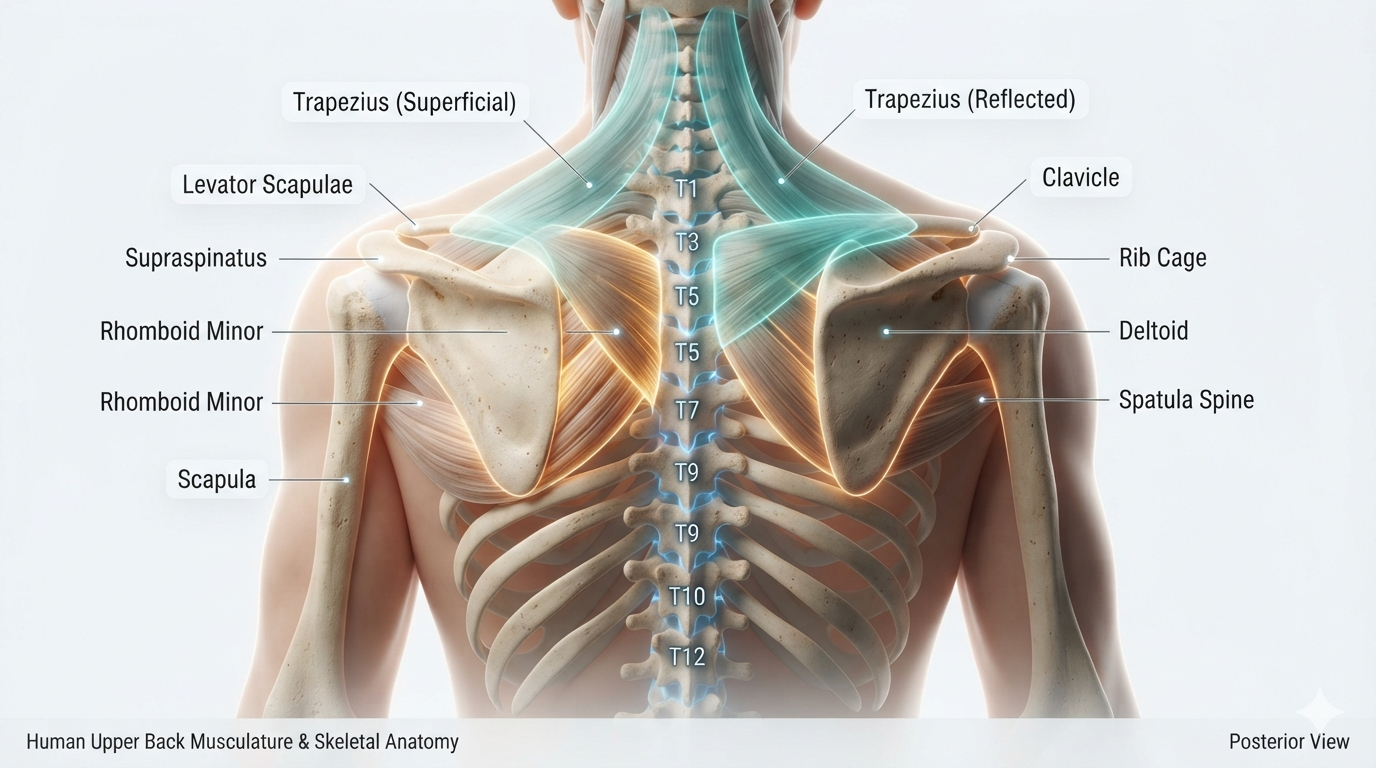
To understand why it hurts, we must first understand how the upper back is constructed. The area between your shoulder blades is anatomically complex, serving as the intersection of your spine, your ribs, and the heavy muscular complex that controls your arms and neck.
The Thoracic Spine (T1-T12)
Your upper and mid-back are supported by the thoracic spine, which consists of 12 vertebrae labeled T1 through T12. Unlike your highly mobile neck (cervical) and lower back (lumbar), the thoracic spine is designed primarily for stability. It anchors the rib cage, protecting vital organs like the heart and lungs. Because it is meant to be stable, when it loses its natural mobility, the surrounding muscles must work overtime to compensate, leading to immense strain.
The Scapula (Shoulder Blades)
The shoulder blades (scapulae) are flat, triangular bones that glide over the back of the rib cage. They are not connected to the spine by ligaments or bones; rather, they are suspended entirely by a complex web of muscles. This “floating” design allows for the incredible range of motion of the human arm, but it also means that muscular imbalances can easily pull the shoulder blades out of alignment.
Key Muscular Structures
The pain you feel between your shoulder blades is often localized in one of the following muscle groups:
- The Rhomboids (Major and Minor): These are the primary muscles connecting the inner edge of your shoulder blade to your spine. They are responsible for pulling your shoulder blades together (retraction). When you slouch forward, these muscles are constantly overstretched and exhausted, leading to painful knots and spasms.
- The Trapezius (Middle and Lower Fibers): A large, diamond-shaped muscle covering the upper back. The middle and lower fibers stabilize the shoulder blades. Weakness here is a primary driver of interscapular pain.
- Levator Scapulae: While located higher up, attaching to the neck, tightness here often refers pain down toward the top of the shoulder blade.
- Erector Spinae: The long muscles running vertically along the spine that keep you upright.
When you experience pain here, it is rarely just an isolated muscle strain. It is usually a chain reaction—a “fascial cascade”—where tightness in the chest pulls the shoulders forward, overstretching the back muscles, and locking up the thoracic vertebrae.
2. The Primary Causes of Pain Between the Shoulder Blades
Why does this specific region hurt so much? The causes range from simple biomechanical overload to complex nerve entrapments.
A. Postural Overload and “Upper Crossed Syndrome”
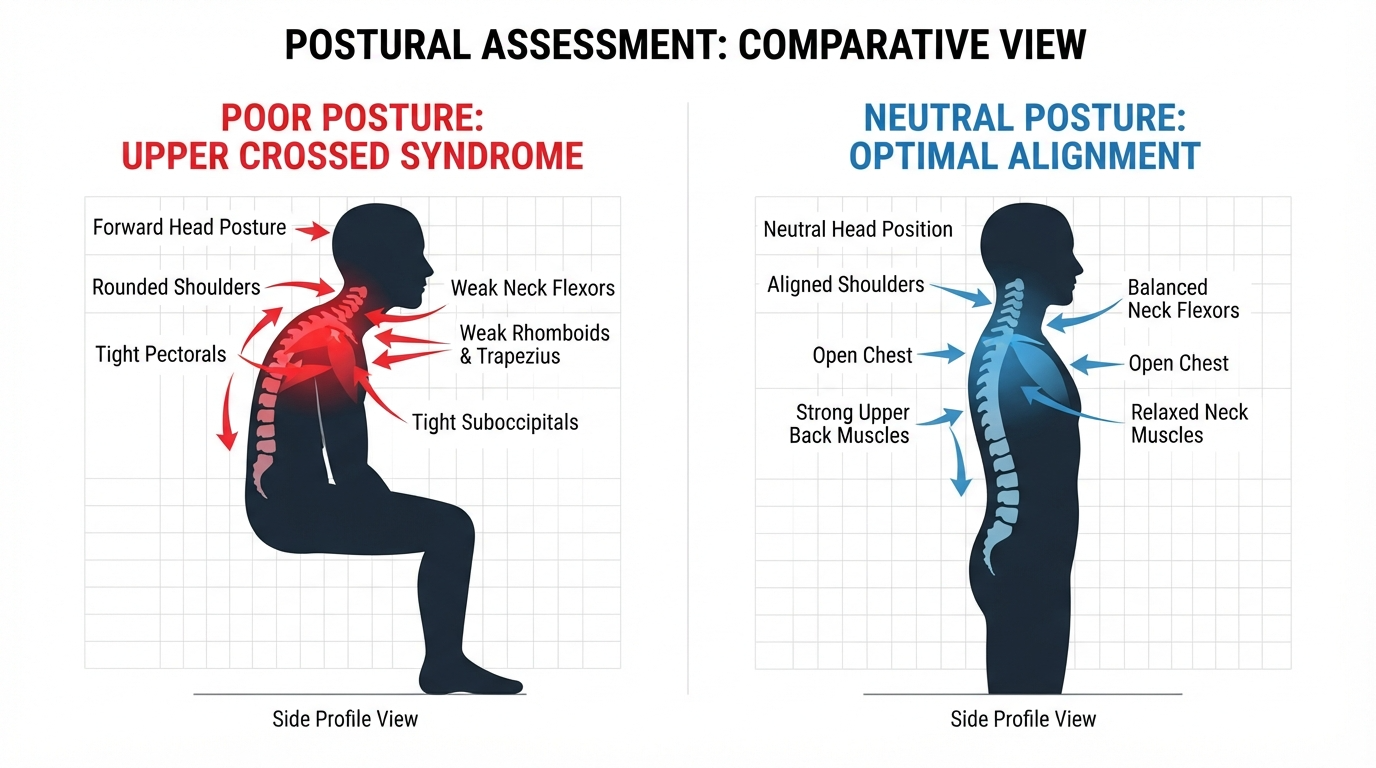
By far the most common cause we see at our Gulshan clinic is postural strain. Modern desk workers spend 8 to 12 hours a day hunched over keyboards, staring down at smartphones, or leaning into steering wheels.
This sustained posture creates a clinical condition known as Upper Crossed Syndrome. In this condition:
- The muscles on the front of the body (pectoralis major and minor, anterior deltoids) become chronically tight and shortened.
- The muscles on the back of the body (rhomboids, lower trapezius, deep neck flexors) become chronically lengthened, weak, and strained.
Imagine holding a heavy bowling ball out in front of you. Your arm would burn within minutes. Now imagine the weight of your head (about 10-12 lbs) leaning forward for 8 hours. The muscles between your shoulder blades are the ones desperately trying to hold that bowling ball up.
B. Rhomboid Muscle Spasm and Trigger Points
A sudden, sharp pain or a persistent, deep ache is often a myofascial trigger point—a hyper-irritable nodule within a taut band of muscle tissue. Rhomboid spasms can be triggered by:
- Carrying a heavy backpack or laptop bag on one shoulder.
- Lifting an object awkwardly.
- Reaching overhead repetitively.
- Sleeping on a mattress that fails to support the spine.
C. Cervical Radiculopathy (Referred Pain from the Neck)
This is a critical differential diagnosis. Often, the pain between the shoulder blades is not actually coming from the upper back at all.
Nerves that exit the lower cervical spine (the neck, specifically C4, C5, C6, and C7) travel down through the shoulder and upper back. If a disc in your neck is herniated, bulging, or if there is arthritis in the neck joints pressing on a nerve, it can refer sharp, shooting, or burning pain directly into the space between the shoulder blades. At Back in Motion, our clinical assessments are designed to differentiate between local muscle pain and referred nerve pain.
D. Thoracic Facet Joint Dysfunction
Your spine is linked together by small joints called facet joints. When the thoracic spine becomes stiff (often from poor posture), these joints can become “locked” or inflamed. This causes localized, sharp pain that worsens when you twist your torso, take a deep breath, or arch your back.
E. Costovertebral Joint Irritation (Rib Dysfunction)
Your ribs attach to your thoracic spine at the costovertebral joints. An awkward twist, a violent cough, or even a sudden sneeze can sprain these tiny joints, causing the rib to become slightly misaligned. This results in an incredibly sharp pain between the shoulder blades that takes your breath away. This is a condition where Osteopathic Manipulative Treatment (OMT) is uniquely highly effective.
F. Psychological Stress and Somatization
Never underestimate the physical manifestation of psychological stress. When humans are stressed, the sympathetic nervous system (fight or flight) activates. This causes an involuntary shrugging of the shoulders and tightening of the upper back and neck muscles. Chronic stress leads to chronic muscle tension, drastically reducing blood flow to the tissue, causing hypoxia and pain.
3. Red Flags: When is Upper Back Pain an Emergency?
Because the thoracic spine shares a neurological and anatomical neighborhood with your vital organs, pain between the shoulder blades can sometimes be a symptom of a severe, life-threatening medical emergency. It is vital to recognize these red flags.
Seek immediate emergency medical attention if your upper back pain is accompanied by:
- Chest Pain or Pressure: Pain that radiates from the chest to the back, arm, or jaw can be a sign of a Myocardial Infarction (Heart Attack). Women, in particular, are more likely to experience upper back or shoulder blade pain during a cardiac event.
- Shortness of Breath: Difficulty breathing combined with upper back pain could indicate a pulmonary embolism (blood clot in the lungs), pneumothorax (collapsed lung), or severe cardiac distress.
- Sudden, Tearing Pain: A sensation of something tearing or ripping in the upper back can be a symptom of an Aortic Dissection, a highly fatal condition requiring instant surgical intervention.
- Gallbladder Issues: Pain centered between the shoulder blades, particularly radiating to the right shoulder blade after eating a heavy, fatty meal, is a hallmark sign of a gallbladder attack or gallstones.
- Loss of Bowel/Bladder Control: Or severe numbness in the legs. This can indicate a massive spinal cord compression.
- Unexplained Weight Loss or Fever: Back pain accompanied by night sweats, fever, or weight loss can be indicative of spinal infection or oncological (cancer) issues.
If you experience any of these red flags, do not wait for a physiotherapy appointment. Go to the nearest emergency room immediately. If your pain is purely musculoskeletal, our Family Medicine Specialists and physical therapists are here to help.
4. The “Desk Worker Epidemic” in Dhaka
In commercial hubs like Gulshan, Banani, and Motijheel, the corporate lifestyle is taking a severe toll on musculoskeletal health. The average desk worker in Dhaka spends roughly 2,000 hours a year sitting in front of a computer. Add to that the prolonged sitting during daily commutes in heavy traffic, and the thoracic spine becomes completely immobile.
The Biomechanics of Sitting
When you sit, your pelvis tilts backward, flattening the natural curve of your lower back. To compensate and keep your eyes level with the horizon, your upper back rounds forward (thoracic kyphosis), and your head juts out (forward head posture).
For every inch your head moves forward past your shoulders, the weight the neck and upper back muscles must support doubles. A 12-pound head effectively becomes a 42-pound weight dragging on your rhomboids and trapezius. This chronic mechanical overload restricts blood flow, builds up lactic acid, and creates fibrotic scar tissue in the muscles, making them stiff and painful.
5. How We Diagnose Upper Back Pain at Back in Motion
Proper treatment requires an accurate diagnosis. Treating a neck-referred pain as if it were a simple muscle knot will yield zero results. At Back in Motion, our diagnostic process includes:
Detailed Patient History
We listen to the story of your pain. Is it sharp or dull? Does it hurt more in the morning or at the end of the day? Does coughing make it worse? What is your occupation?
Postural and Biomechanical Analysis
We assess your standing and seated posture. We look for asymmetry in your shoulder heights, the curvature of your thoracic spine, and the resting position of your scapulae.
Range of Motion (ROM) Testing
We measure exactly how far you can bend, extend, and rotate. Restricted thoracic rotation is often the primary culprit in interscapular pain.
Neurological and Orthopedic Screening
We perform specialized orthopedic tests (like the Spurling’s Test or Cervical Compression tests) to rule out nerve entrapment in the neck. We test your reflexes, muscle strength, and dermatomal sensation to ensure the pain is purely musculoskeletal.
Palpation and Myofascial Assessment
Our experts use their hands to identify the exact location of muscle spasms, trigger points, and restricted spinal segments.
6. Clinical Physiotherapy: The U.S. Standard of Care
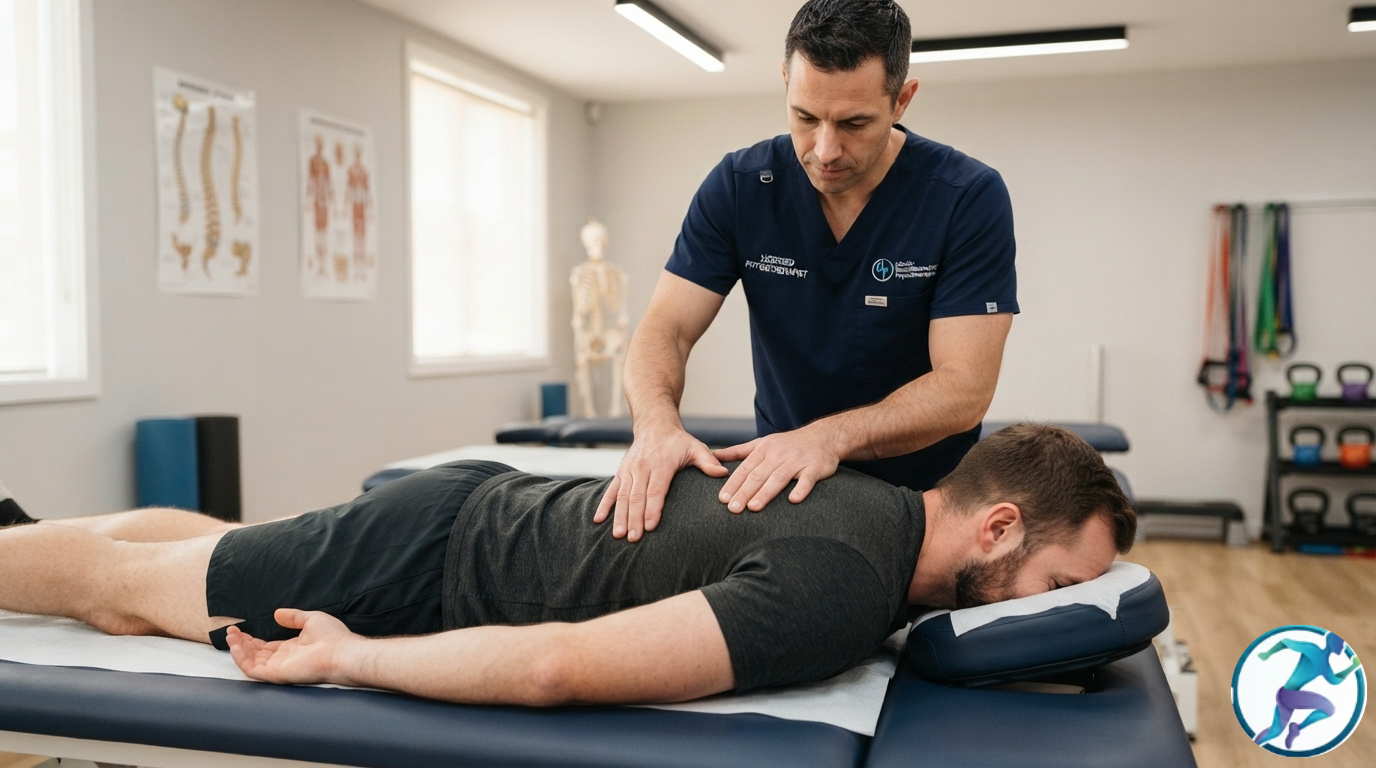
At Back in Motion, we do not rely on basic rest or generic heat packs. We utilize advanced, active Orthopedic & Musculoskeletal Rehabilitation techniques based on the highest U.S. clinical standards.
A. Manual Therapy and Joint Mobilization
If your thoracic spine is locked, no amount of stretching will fix it. Our therapists use skilled manual mobilization techniques (such as Maitland or Mulligan concepts) to apply gentle, graded pressure to individual vertebrae, restoring their natural glide and movement.
B. Myofascial Release and Soft Tissue Mobilization
To address chronic muscle knots and fascial restrictions, we utilize deep tissue manipulation, instrument-assisted soft tissue mobilization (IASTM), and trigger point therapy. This breaks down fibrotic adhesions, brings fresh blood to the hypoxic tissue, and allows the muscle fibers to relax.
C. Osteopathic Manipulative Treatment (OMT)
Under the guidance of experts like Dr. Abdullah Yousuf, we integrate OMT. This holistic medical approach is particularly effective for upper back pain involving rib dysfunctions (costovertebral joints). High-Velocity Low-Amplitude (HVLA) thrusts, muscle energy techniques (MET), and counterstrain can instantly relieve structural pain that traditional massage cannot reach.
D. Electrotherapy and Modalities
While not the core of our treatment, modalities like Ultrasound Therapy, Transcutaneous Electrical Nerve Stimulation (TENS), or Laser Therapy can be used initially to rapidly reduce acute inflammation and pain signaling, creating a window of opportunity for active exercise.
E. Neuromuscular Re-education and Targeted Strengthening
Once the pain is reduced and mobility is restored, we must build strength to prevent the pain from returning. This involves specific exercises targeting the lower trapezius, rhomboids, and deep neck flexors, while simultaneously stretching the overactive pectoral muscles. We essentially reprogram your brain’s connection to these muscles, correcting the “Upper Crossed Syndrome.”
7. The Ultimate Ergonomic Guide for Your Desk
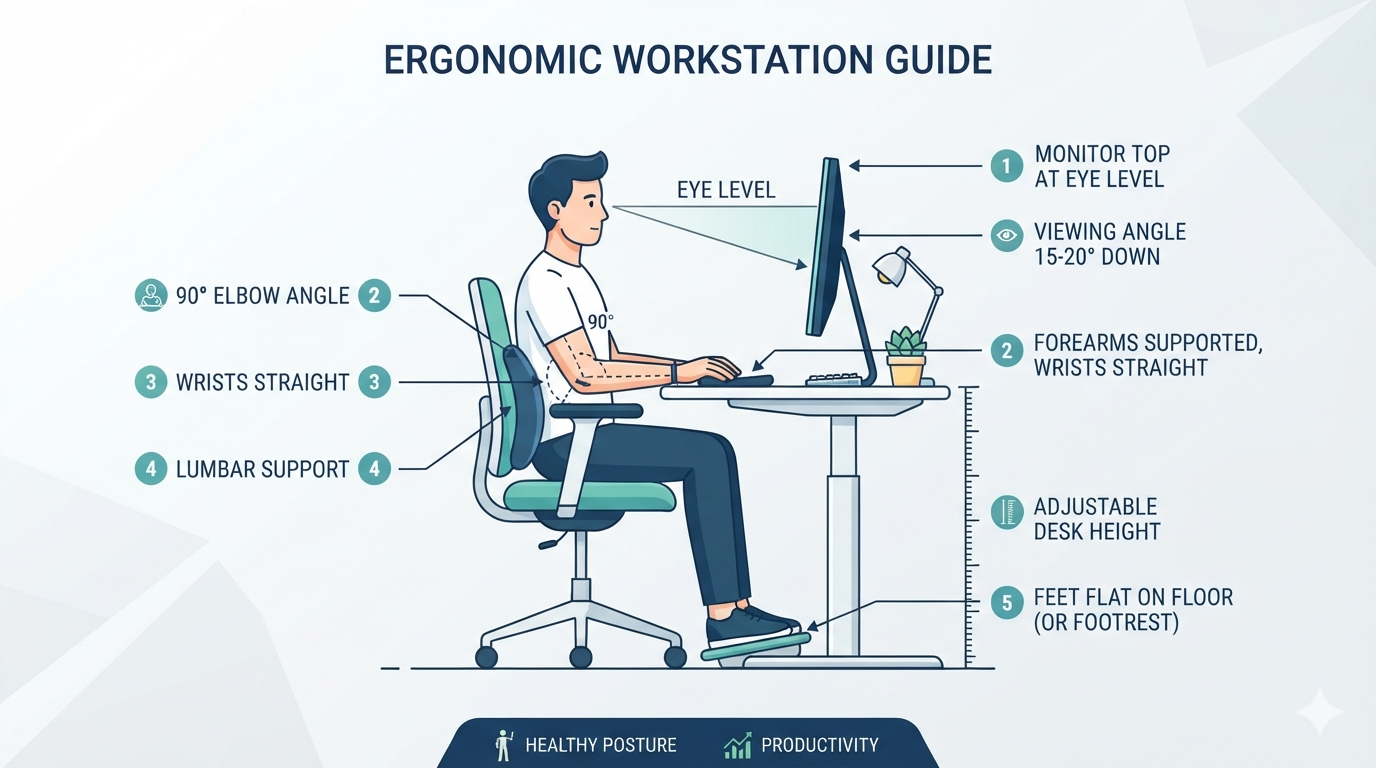
You cannot out-rehab a bad desk setup. If you receive an hour of world-class physiotherapy but return to 8 hours of terrible posture, the pain will return. Here is how to set up your workspace:
- The Screen Height: The top third of your computer monitor should be exactly at eye level. If you are looking down at a laptop on a desk, you are destroying your upper back. Buy a laptop stand and an external keyboard.
- The Chair: Your chair must support the natural curve of your lower back (lumbar support). If your lower back is supported, your upper back will naturally align itself.
- Armrests: Your armrests should allow your elbows to rest at a 90-degree angle, with your shoulders completely relaxed. If the armrests are too high, you will shrug your shoulders. If they are too low, the weight of your arms pulls down on your upper back.
- The 20-20-20 Rule: Every 20 minutes, look at something 20 feet away for 20 seconds. More importantly, stand up and perform a thoracic extension stretch. Micro-breaks are more effective than one long break.
8. Five Evidence-Based Home Exercises for Instant Relief
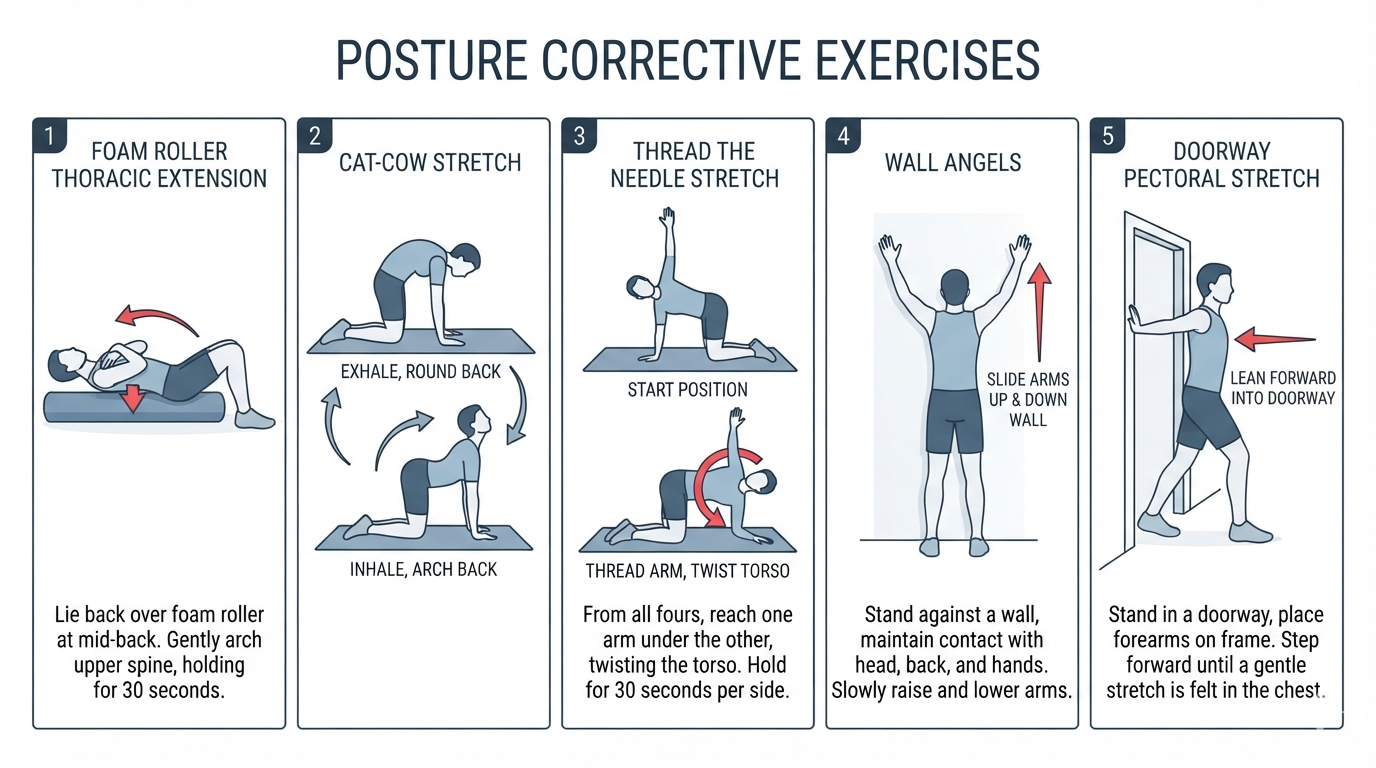
Here are five highly effective exercises our physiotherapists prescribe to combat upper back pain. Note: Stop immediately if any exercise causes sharp, shooting pain.
1. Thoracic Extension on a Foam Roller
- The Goal: To reverse the hunched, forward-flexed posture of the spine.
- How-to: Place a foam roller horizontally across your mid-back (just below the shoulder blades). Bend your knees and place your feet flat on the floor. Support your head with your hands. Gently lean backward over the roller, extending your spine. Hold for 5 seconds, then return to neutral. Roll the foam roller up one inch and repeat. Do not roll onto your neck or lower back.
- Frequency: 10 repetitions, twice a day.
2. The Cat-Cow Stretch
- The Goal: To mobilize the entire spine and loosen the muscles between the shoulder blades.
- How-to: Get on your hands and knees. Ensure your wrists are directly under your shoulders and knees under your hips. Inhale as you drop your belly toward the floor, lifting your chest and tailbone (Cow). Exhale as you round your upper back toward the ceiling, tucking your chin to your chest (Cat), feeling a deep stretch between your shoulder blades.
- Frequency: 15 slow cycles, morning and night.
3. “Thread the Needle”
- The Goal: To improve thoracic rotation, which is often severely restricted in desk workers.
- How-to: Start on your hands and knees. Take your right arm and slide it underneath your left arm, dropping your right shoulder and the right side of your head to the floor. Use your left hand to gently push into the floor to deepen the twist in your upper back. Hold the stretch for 30 seconds.
- Frequency: 3 sets on each side.
4. Scapular Retractions (Wall Angels)
- The Goal: To activate and strengthen the rhomboids and lower trapezius.
- How-to: Stand with your back against a wall. Your heels, buttocks, upper back, and head should be touching the wall. Raise your arms to 90 degrees (like a goalpost), keeping your elbows and the back of your hands against the wall. Slowly slide your arms up the wall as high as you can without losing contact, then pull them back down, squeezing your shoulder blades together.
- Frequency: 3 sets of 10 repetitions.
5. Pectoral Doorway Stretch
- The Goal: To open up the tight chest muscles that are pulling your shoulders forward.
- How-to: Stand in an open doorway. Raise your arms to a 90-degree angle and place your forearms on the doorframe. Gently step forward with one foot until you feel a comfortable stretch across your chest and the front of your shoulders. Hold for 30 to 45 seconds.
- Frequency: 3 to 4 times a day, especially during work breaks.
9. Sleep Posture: Don’t Ruin Your Back at Night
How you sleep plays a massive role in upper back health. If you wake up with pain between your shoulder blades, your sleep environment needs an audit.
- Avoid Stomach Sleeping: Sleeping on your stomach forces your neck to rotate to one side for hours, which severely torques the cervical spine and strains the muscles extending down into the upper back.
- Side Sleepers: If you sleep on your side, ensure your pillow is thick enough to fill the gap between your neck and the mattress. Your spine should be in a straight line. Hug a thick pillow to your chest to prevent your top shoulder from collapsing forward and stretching your rhomboids all night.
- Back Sleepers: This is the best position for spinal alignment. Use a relatively flat pillow to avoid pushing your head forward.
10. Nutrition, Hydration, and Muscle Health
Your musculoskeletal system relies on optimal chemistry. Chronic muscle spasms and trigger points in the upper back can be exacerbated by:
- Dehydration: Muscles are 70% water. Dehydrated fascial tissue becomes sticky and stiff, restricting movement.
- Electrolyte Imbalances: A lack of Magnesium and Potassium can lead to involuntary muscle twitching and cramping.
- Vitamin D Deficiency: Extremely common in desk workers who avoid the sun. Low Vitamin D is linked to chronic musculoskeletal pain and bone density issues.
Consult with our Family Medicine team for a comprehensive health check-up to ensure underlying nutritional deficiencies aren’t slowing down your physical rehabilitation.
11. Why Choose Back in Motion for Upper Back Pain?
Finding the right physiotherapy center near you is crucial. At Back in Motion, located conveniently in Dhaka, we do not believe in a one-size-fits-all approach. We believe in active rehabilitation.
- Diagnostic Precision: We don’t just guess; we test. We identify whether your pain is muscular, neurological, or structural.
- U.S. Standard of Care: Our protocols are aligned with the latest evidence-based practices from global physical therapy leaders.
- Holistic Integration: By combining traditional physical therapy with Osteopathic Manipulative Treatment (OMT), we provide a level of care unmatched in Bangladesh.
- Patient Education: We spend time teaching you why you are in pain and giving you the tools (exercises, ergonomic advice) to fix it permanently.
Ready to stand tall and live pain-free?
Book your consultation with Back in Motion today and let our expert team help you reclaim your mobility.
12. Frequently Asked Questions (FAQs)
Q1: How long does upper back pain take to heal with physiotherapy?
Answer: This depends on the root cause. Acute muscle strains can significantly improve within 1 to 3 weeks of targeted physiotherapy. Chronic postural pain (Upper Crossed Syndrome) that has built up over years may take 6 to 12 weeks of consistent rehabilitation, manual therapy, and ergonomic changes to fully resolve.
Q2: Should I use ice or heat for pain between my shoulder blades?
Answer: If the pain is sudden and sharp due to a recent injury or tweak, use ice wrapped in a towel for 15-20 minutes to reduce acute inflammation. For chronic, dull, aching muscle tension (which is most common in desk workers), heat therapy is better as it promotes blood flow and relaxes tight fascia.
Q3: Can stress really cause such severe back pain?
Answer: Absolutely. Psychological stress triggers the release of cortisol and adrenaline, causing involuntary muscle contractions, particularly in the trapezius and rhomboids. Over time, this constant tension leads to hypoxic (oxygen-starved) muscle tissue, resulting in severe pain.
Q4: Is it safe to have someone crack my back to relieve the pain?
Answer: Unprofessional, forceful manipulation by untrained individuals can cause severe damage to the ribs, ligaments, or spinal discs. Spinal manipulation should only be performed by highly trained professionals, such as the doctors utilizing Osteopathic Manipulative Treatment (OMT) at Back in Motion, following a thorough clinical assessment.
Q5: Can a bad mattress cause upper back pain?
Answer: Yes. A mattress that is too soft will allow your spine to sag out of alignment, while a mattress that is too firm can create pressure points on your shoulder blades and ribs. A medium-firm mattress generally offers the best balance of support and contouring for the thoracic spine.
Q6: Why do I feel the pain radiating down my arm?
Answer: If the pain between your shoulder blades is accompanied by numbness, tingling, or radiating pain down your arm into your fingers, it is highly likely that you have a cervical radiculopathy (a pinched nerve in your neck). This requires immediate clinical evaluation to prevent long-term nerve damage.
Q7: Will massage therapy cure my upper back pain?
Answer: Massage therapy is excellent for temporary relief of muscle tension and improving local blood flow. However, if your pain is caused by poor posture, weak lower trapezius muscles, or restricted spinal joints, massage alone will not fix the root cause. It must be combined with active strengthening and joint mobilization—the core of physiotherapy.
Q8: Can upper back pain cause headaches?
Answer: Yes. The muscles of the upper back (like the upper trapezius and levator scapulae) attach to the base of the skull. When these muscles become chronically tight due to poor posture, they can refer pain up the back of the head, resulting in severe tension headaches (cervicogenic headaches).
Q9: Do I need an MRI or X-ray for this type of pain?
Answer: In the vast majority of cases, imaging is not necessary. Muscular trigger points and postural strain do not show up on X-rays or MRIs. Imaging is usually only recommended if our clinical assessment uncovers “red flags,” trauma, or if the pain fails to respond to conservative physiotherapy treatment after several weeks.
Q10: Can posture correctors or braces fix my upper back pain?
Answer: We generally do not recommend relying on passive posture braces. While they force you into a better position temporarily, over-reliance on them causes your intrinsic back muscles to weaken further because the brace is doing the work for them. The best “posture brace” is a strong set of your own muscles built through active rehabilitation exercises.