

Managing Director & Chief Medical Consultant
Dr. Md. Abdullah Yousuf, D.O.
Board-Certified Osteopathic Physician (USA) | BMDC Reg. No. A-105673 | Specialist in Cranial & OMT Care
Chief Executive Officer & DPT Specialist
Dr. Tazia Sardar, DPT
Doctor of Physical Therapy (Stony Brook University, NY, USA) | APTA Member | Orthopedic & Neurological Rehab Specialist
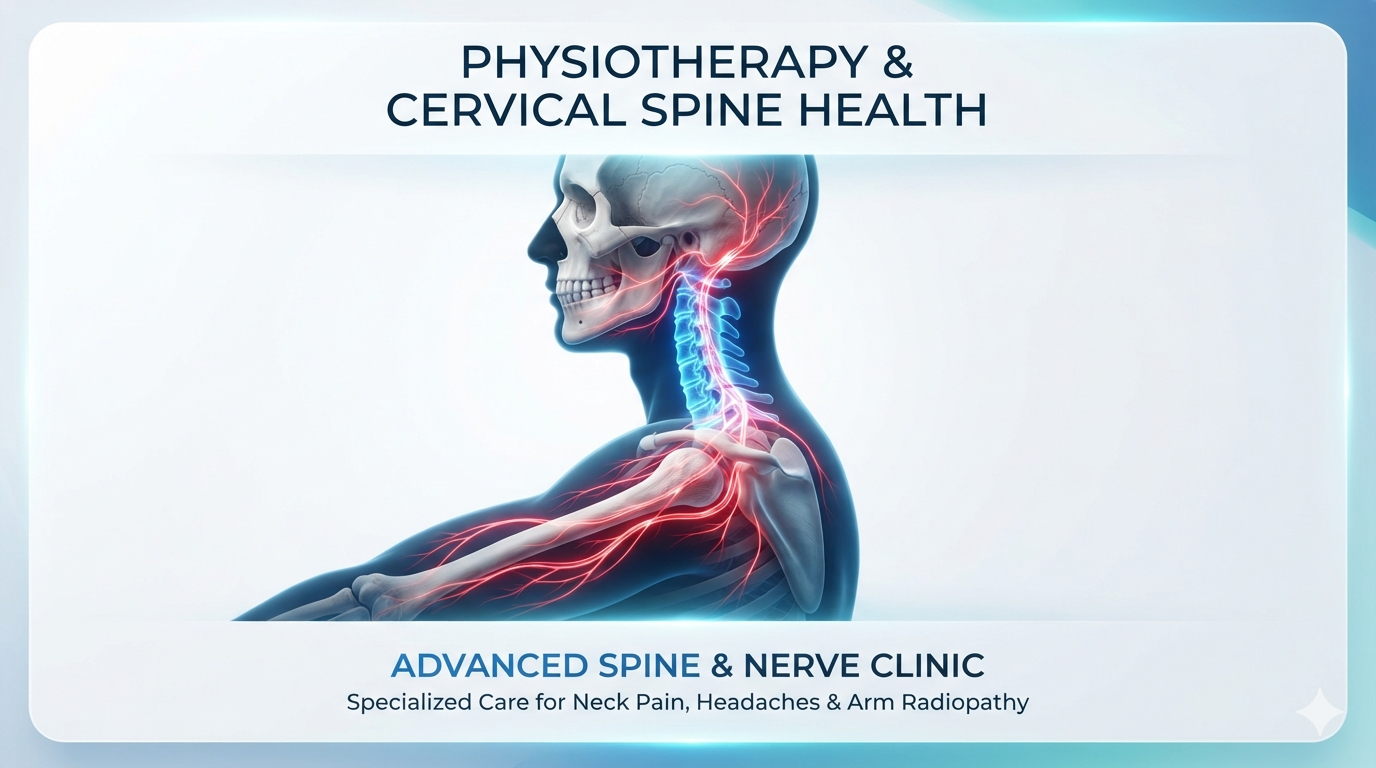
When discomfort develops in the cervical spine, it rarely remains localized. Because the seven cervical vertebrae protect a highly concentrated web of neural pathways, blood vessels, and supportive myofascial structures, mechanical dysfunction in the neck frequently radiates outward. Patients often seek guidance when they experience persistent lower neck pain that unexpectedly evolves into shooting sensations, throbbing cranial pressure, or deep structural aches across multiple regions of the upper body.
Understanding the root mechanism behind your symptoms—whether it is true nerve root compression, a cervicogenic headache origin, or chronic muscular referral—is the mandatory foundation for lasting clinical recovery.
Below is an exhaustive diagnostic overview designed to help you identify your symptom patterns, supported by clinical insights and advanced physiotherapy for cervical neck pain.
1. Nerve Compression & Lower Neck Pain
When structural narrowing or disc bulges occur in the lower cervical segments, it frequently presents as chronic lower neck pain coupled with sharp neck and arm pain that travels down the brachial plexus into the fingers.
- C5-C6 Distribution: Radiates into the bicep, lateral forearm, and thumb.
- C7 Distribution: Shoots down into the tricep and middle finger.
2. Cranial & Migraine Connections
Struggling with debilitating neck and head pain? When discomfort originates as stubborn back of neck pain and crawls upward across the skull, it often indicates cervicogenic headache involvement linked to the C1-C3 facet joints.Furthermore, structural cervical stiffness is a documented neurological trigger that accelerates migraine neck pain episodes by overstimulating central processing pathways.
3. Myofascial Shoulder Strain
Persistent neck and shoulder muscle pain is a hallmark of modern sedentary lifestyles, where prolonged forward head posture (“tech neck”) forces the upper trapezius and levator scapulae into constant overload.
“Targeted myofascial release and neuromuscular re-education are essential to break the cycle of continuous muscle guarding,” notes Dr. Tazia Sardar, DPT, CEO and Physical Therapy Specialist at Back in Motion.
4. Temporomandibular & Jaw Strain
Many individuals are surprised to discover that neck and jaw muscle pain frequently occur together. Forward head posture alters mandible kinematics and overactivates the Sternocleidomastoid (SCM) muscle, placing excessive mechanical stress on the Temporomandibular Joint (TMJ).
Anatomy of Cervical Nerve Compression and Radiculopathy
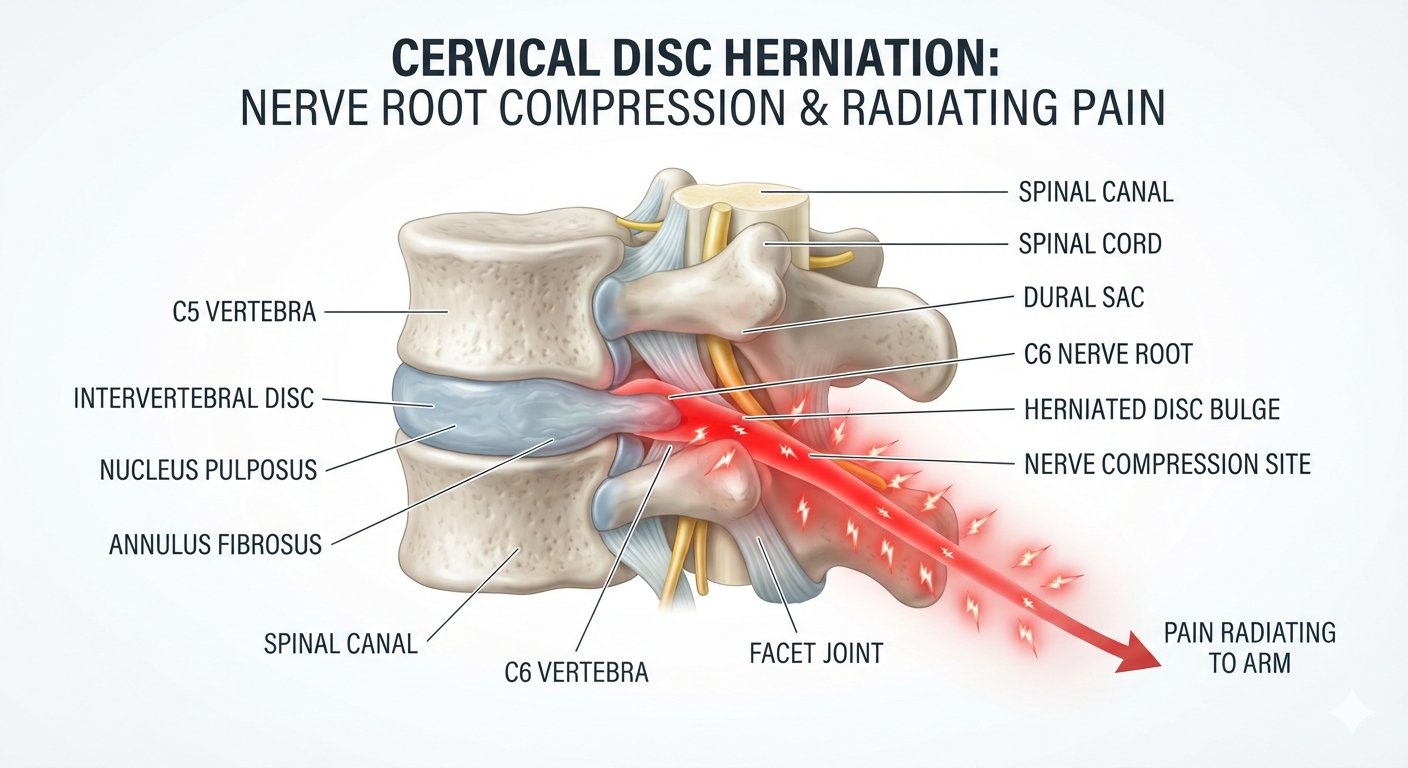
The human cervical spine is an engineering marvel, balancing the weight of the head while allowing fluid multidirectional movement. However, this mobility comes with vulnerability. When intervertebral discs degenerate, lose hydration, or suffer acute herniation, the protective space for exiting nerve roots—known as the neural foramen—diminishes significantly.
When a nerve root is mechanically pinched or chemically inflamed, it generates symptoms far away from the neck itself. According to clinical neurology research published via PubMed Central repositories, cervical radiculopathy accounts for a major share of upper extremity neuropathic pain syndromes. Patients experience paresthesia (pins and needles), sensory loss, or motor weakness that corresponds precisely to the affected dermatome.
Unraveling Cervicogenic Headaches and Migraine Triggers
The upper three cervical segments (C1, C2, and C3) possess a unique anatomical relationship with the trigeminal nerve system via the trigeminocervical nucleus in the brainstem. Sensory signals from the upper neck and the face converge on the same second-order neurons.
This anatomical cross-talk explains why dysfunction in the upper cervical facet joints or suboccipital muscles refers pain directly into the temples, forehead, eyes, and scalp. Differentiating true vascular migraines from cervicogenic head pain requires expert palpation and diagnostic imaging to isolate whether spinal mechanics are driving the headache cycle.
Targeted Clinical Rehabilitation at Back in Motion
Treating radiating cervical pain requires precision. A generic massage or surface heat pad cannot decompress a pinched nerve root or realign restricted facet joints. Our specialized clinical framework integrates:
- Non-Surgical Spinal Decompression & OMT: Led by Dr. Md. Abdullah Yousuf, D.O., focusing on osteopathic manipulation, cranial techniques, and widening neural foramina to relieve compressed nerve roots.
- Advanced Manual Physical Therapy: Led by Dr. Tazia Sardar, DPT, utilizing targeted joint mobilizations, soft tissue release, and dry needling to eliminate myofascial trigger points.
- Postural & Neuromuscular Retraining: Active therapeutic exercise regimens designed to strengthen deep cervical flexors and restore ideal spinal curvature.
Ready to overcome your symptoms? Explore our comprehensive protocol for professional neck pain treatment in Dhaka.
Frequently Asked Questions About Radiating Neck Pain
1. Why does my neck pain travel down into my arm and hand?
2. How can I distinguish between a cervicogenic headache and a migraine?
3. Can poor posture at my desk cause jaw pain and facial tightness?
4. What is the role of non-surgical spinal decompression in treating radiating pain?
5. Is massage therapy enough to fix chronic neck and shoulder muscle pain?
6. When should I seek immediate medical attention for neck pain?
7. How long does it take for cervical radiculopathy to heal with physical therapy?
8. What qualifications do the clinicians at Back in Motion hold?
9. Can sleeping on an improper pillow worsen my neck and head pain?
10. How can I schedule a diagnostic evaluation at Back in Motion?
Need Clinical Assessment for Persistent Neck Pain?
Don’t let radiating arm, shoulder, head, or jaw symptoms limit your daily life. Visit our certified physical therapy and osteopathic team at one of our specialized clinic locations:
- 📍 Gulshan-1, Dhaka Branch: Back in Motion Ltd., Gulshan-1 Facility, Dhaka, Bangladesh. (Specialized spine rehabilitation, OMT & active physical therapy center)
- 📍 Khulna Branch: Main Highway Care Center, Khulna-Satkhira Highway, Khulna. (Comprehensive musculoskeletal rehabilitation center)